If you’re new to personal finance, the world of retirement savings can feel confusing — especially when it comes to YOUR 401(k) and the contribution rules for 2026. This clear, beginner‑friendly guide explains what a 401(k) is, why it matters, and how those contribution limits work in 2026 — with simple examples, a handy table, and FAQs you’ll actually understand.
Table of Contents
What Is a 401(k)?
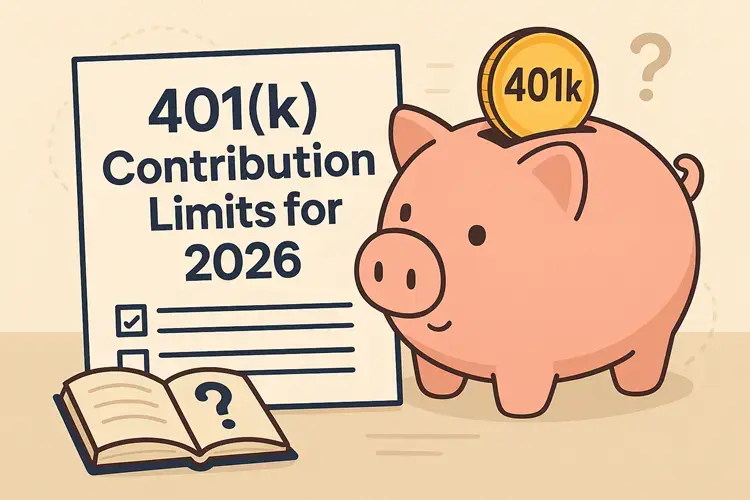
A 401(k) is an employer-sponsored retirement savings account. Think of it as a “future money piggy bank.” You put money in now, it grows over time, and you can use it after retirement.
Simply put: A 401(k) is a workplace retirement plan that helps you save money for the future with tax advantages.
Why Contribute to a 401(k)?
- Free Money from Employer: Many employers offer a 401(k) match. For example, if you contribute $100, your employer might add $100.
- Tax Benefits: Contributions reduce your taxable income today, meaning you pay less in taxes now.
- Money Grows Over Time: Your 401(k) can be invested in stocks, bonds, and funds, allowing your savings to grow over many years.
How a 401(k) Works
- Get a job with a 401(k) plan: Not all employers offer it, but many do.
- Choose your contribution amount: Example: 5% of your paycheck or a set dollar amount.
- Automatic deposit: Your contribution is automatically deducted from your paycheck.
- Money grows over time: Investments increase your balance gradually.
- Withdraw at retirement: Typically after age 59½, you can start using the money.
401(k) Contribution Limits for 2026
The IRS sets rules for how much you can contribute to a 401(k) each year. These limits prevent abuse and ensure fairness.
| Contribution Type | Limit for 2026 | Who Can Use It? |
|---|---|---|
| Employee Contribution (Under 50) | $24,500 | Everyone |
| Catch-Up Contribution (Age 50+) | $8,000 | People 50 or older |
| Super Catch-Up (Ages 60–63) | $11,250 | Plans that allow this boost |
| Total Employer + Employee Limit | $72,000 | Combined contributions |
Examples of 401(k) Contributions
Example 1: Worker Under Age 50
You can contribute up to $24,500 of your own money in 2026.
Example 2: Worker Age 50 or Older
You can contribute:
$24,500 regular + $8,000 catch-up = $32,500 total
Example 3: Worker Age 60–63
If your plan allows it:
$24,500 regular + $11,250 super catch-up = $35,750 total
Example 4: Total Contribution Including Employer
You contribute $24,500, employer contributes $5,000 → total $29,500. Still under the $72,000 max.
FAQs About 401(k) Contributions 2026
1. What is a 401(k) plan and how does it work?
A 401(k) is an employer-sponsored retirement account where you contribute part of your paycheck (often pre-tax) and your money grows over time.
2. What are the contribution limits for a 401(k) in 2026?
For 2026, the employee regular contribution limit is $24,500. People 50+ may add a catch-up contribution, and ages 60–63 may qualify for a super catch-up if the plan allows.
3. What is a catch-up contribution and who is eligible?
It’s an extra contribution for people age 50 or older to “catch up” on retirement savings.
4. What is a super catch-up contribution?
A super catch-up allows ages 60–63 to contribute more than the normal catch-up limit, if the plan allows.
5. Can I contribute to a 401(k) and an IRA?
Yes, you can do both, but each has separate limits and rules.
6. How much should I contribute to my 401(k)?
Contribute at least enough to get the full employer match. Then consider increasing toward the annual limit as your budget allows.
7. When can I withdraw from my 401(k) without penalties?
Typically after age 59½. Early withdrawals may incur taxes and a 10% penalty.
8. What happens if I leave my job—what happens to my 401(k)?
You can usually leave the money in your old plan, roll it into a new employer’s 401(k), or roll it into an IRA.
9. Can I borrow from my 401(k)?
Some plans allow loans up to 50% of your vested balance or $50,000. Loans must be repaid to avoid taxes and penalties.
10. What is an employer “match” and why is it important?
An employer match is when your employer adds money to your 401(k) based on your contribution. It’s essentially free money and a major benefit of contributing early.
Key Takeaways
- A 401(k) is a smart way to save for the future.
- Employer matches are free money—always take advantage if possible.
- IRS 2026 limits: $24,500 regular, $8,000 catch-up, $11,250 super catch-up, $72,000 total contributions.
- Start saving early to maximize growth over time.
External Links
Disclaimer
This article is for educational purposes only and is not financial advice. Please consult a certified financial advisor or tax professional for guidance specific to your situation. Contribution limits and rules may change, so always check the official IRS website for the latest information.

Leave a comment
Your email address will not be published. Required fields are marked *